Do Electric Snow Blowers Work, and How Much Snow Can They Take?
Yes, electric snow blowers work, within limits. They make the most sense where you don't get a lot of snow. What decides it is how deep your snow gets, how wet it is, what surface you clear and how long a battery lasts. If you're ready to buy, the two picks come first.
 By Alex M. · Published · Updated
As an Amazon Associate I earn from qualifying purchases.
Best electric snow blowers to start with
For the full side-by-side, see the best electric snow blower guide.
Best overall
 On Amazon
(paid link) 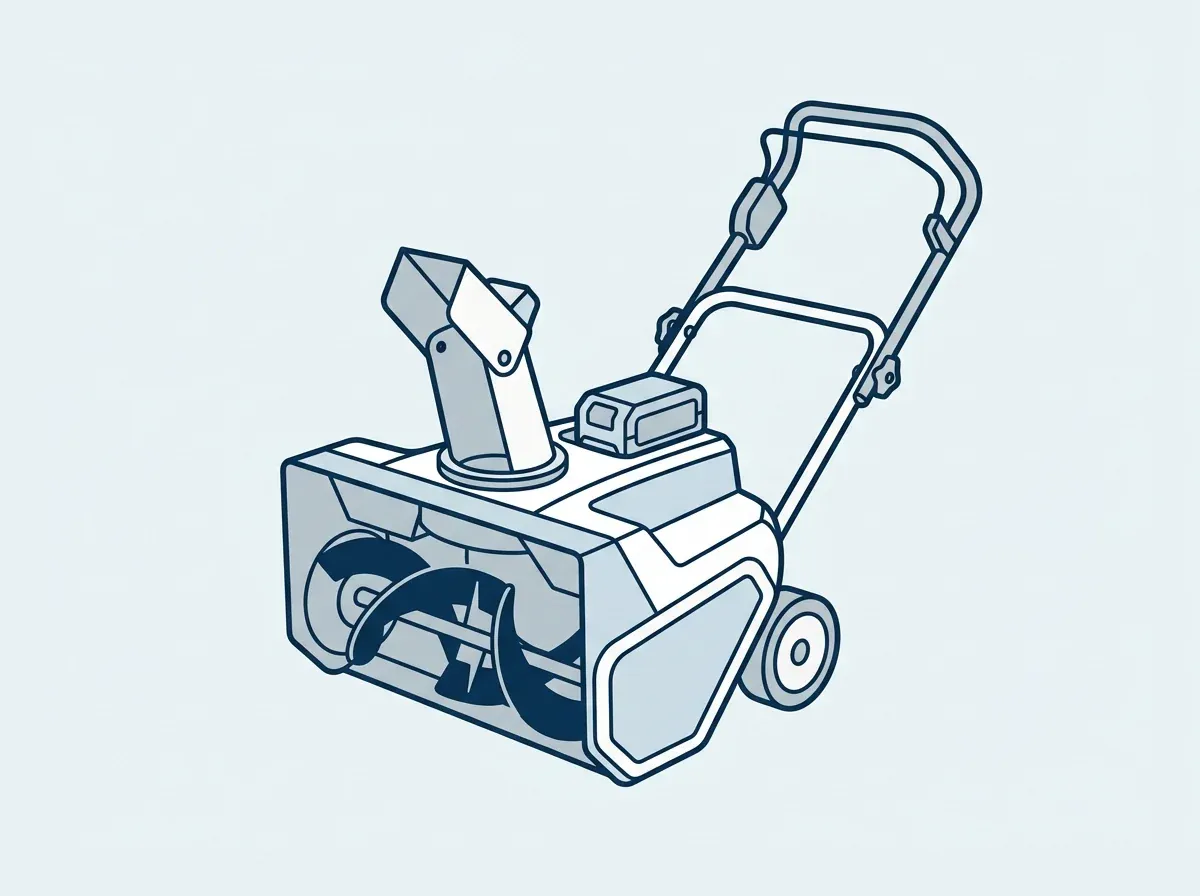
Illustration EGO Power+ SNT2134
It cuts a 21 in by 13 in path, throws up to 45 ft and includes two 6.0 Ah batteries.
Check price on Amazon(paid link)
Best corded pick
 On Amazon
(paid link) 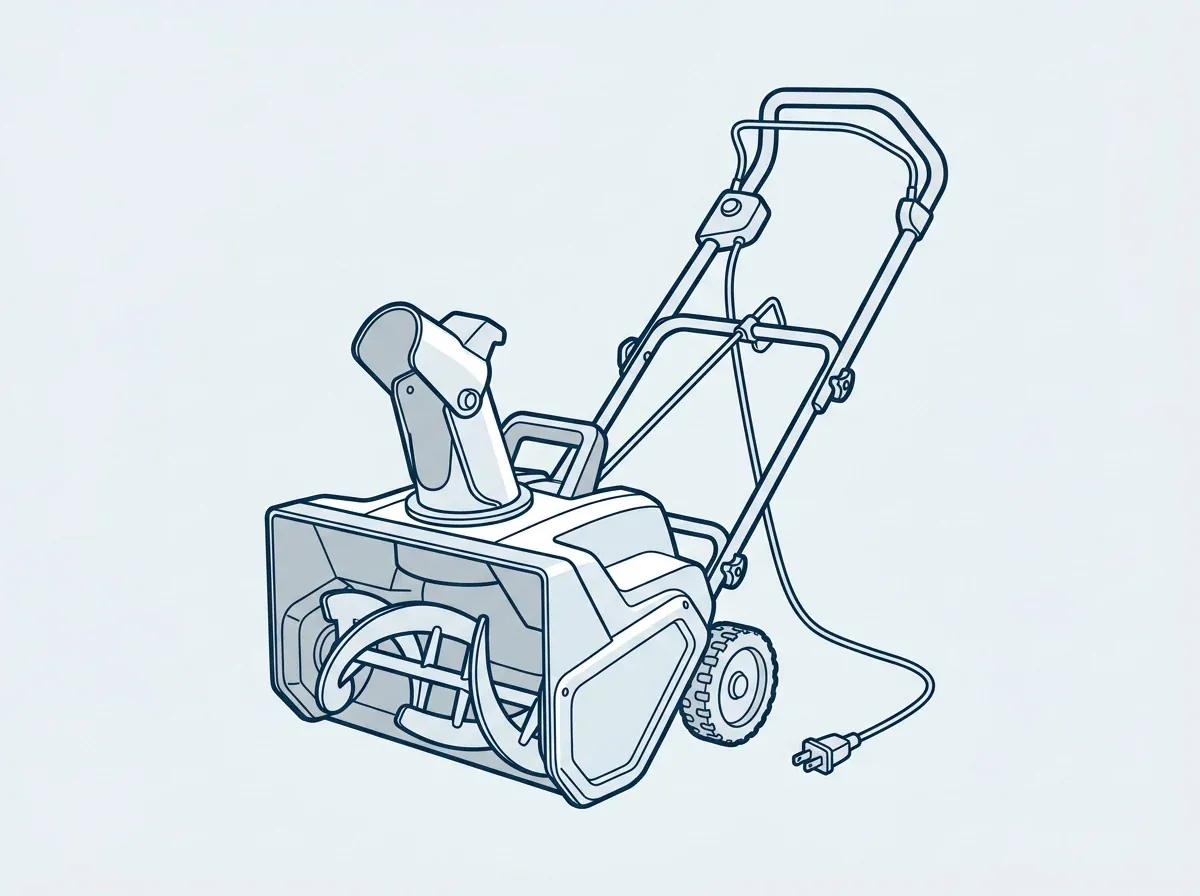
Illustration Snow Joe SJ627E
It runs a corded 15 A motor, starts by push button and is made for light, fluffy snow on pavement.
Check price on Amazon(paid link)
Key takeaways
- Big snowfalls favor gas. Family Handyman says most electric models can't handle as much snow as gas ones, while Consumer Reports' test lead puts battery models close to comparably sized gas models in performance.
- Single-stage machines suit lighter snowfalls. Two-stage designs are built to take on more.
- Heavy, packed snow needs a gentle hand. Ease into wet snow and plow piles instead of overloading the machine.
- Gravel and single-stage augers don't mix. The low auger is the problem, and two-stage designs keep theirs off the ground.
- Battery models are the quiet option. Expect far less noise than a gas engine.
In this guide
How much snow can an electric snow blower handle?
Family Handyman calls electric snow blowers a good option for snow no more than a foot deep, and Toro lists up to 12 inches for its own electric and battery models. Some battery models carry lower limits. Consumer Reports says single-stage battery models are meant to handle up to only 6 inches and two-stage battery models up to 9 inches, while Bob Vila saw an EGO 24-inch electric model clear snow loads of more than 2 feet in its tests.
Maker figures
Toro electric and battery snow blowers go up to 12 inches of snow and up to 18 cars per driveway. The cordless Snow Joe 24V-X2-SB21-RM has an 8-inch snow cut depth and is made for light, fluffy snow. It clears up to 1,350 square feet of 3-inch snow.
Battery count matters on some EGO models. The SNT2100 shouldn't run on a single battery in snow deeper than 3 inches. For the SNT2400, the line is 8 inches. Neither should run on one battery in very wet or icy snow.
The two picks
The SNT2134 clears a path 21 in wide and 13 in high. EGO rates it for up to a 14-car driveway with 8 in of snow on a single charge with its two 6.0 Ah batteries. The SJ627E's path is an inch wider at 22 in by 13 in. It moves up to 840 lb of snow per minute.
Wet snow, plow piles, ice and gravel
Wet snow splits the sources, while plow piles, ice and gravel each come with clear cautions.
Wet, heavy snow
Toro's 60V page says its battery machines blast through heavy, wet snow, yet its own Power Max e24 shouldn't be overloaded with extremely heavy or wet snow. Either way, don't force the machine into it.
If heavy, wet snow is a regular thing where you live, start with the heavy snow guide.
Plow piles
Then there's the ridge the town plow leaves at the end of your driveway. Greenworks calls that snow dense and compacted and advises breaking it down gradually from the top or front of the pile, not forcing the machine into it.
Ice
A glazed driveway after freezing rain is a different job. The Ryobi RY40806 40V is meant to run only on a hard, clean surface, not on ice, because you can slip and fall.
Gravel
Single-stage machines are a poor fit for gravel because they work closer to the ground. A two-stage auger rides high enough that it doesn't touch the surface. The EGO SNT2100 isn't meant for graveled surfaces at all. The SNT2400 can be used there, but only once it's adjusted for that surface by setting the skid shoe height. For more, see the gravel driveway guide.
How long a battery snow blower runs, and what the cold does
Most battery snow blowers run about 30 to 45 minutes per charge, by Bob Vila's count, and heavy snow can cut a 45-minute run to 30. The cordless Snow Joe 24V-X2-SB21-RM tops out at 25 minutes. The SNT2134's product page gives no run time in minutes and no charge time.
What the cold does
On the cold, the evidence points both ways. Consumer Reports says run times commonly shrink in the cold and found them 5 to 20 percent shorter in its extreme-cold tests, while Bob Vila's cordless test models handled -7 degrees Fahrenheit with no battery or power output issues.
Some manuals give firm numbers. The EGO SNT2100 is meant to run between -4°F and 50°F. If its battery is at -4°F or colder, the machine may not start. The battery should then warm indoors for 10 minutes or longer. The Westinghouse WSnow18 48V is made for continuous operation above 23°F (-5°C) and can run in extreme cold for short periods.
Are electric snow blowers worth it?
Yes, electric snow blowers are worth it if your snowfalls stay modest and you'd rather skip engine upkeep. A battery model starts instantly, with no warm-up. There's no gasoline to store and no yearly engine maintenance. Battery models also run much more quietly than gas.
When gas is the better call
Gas is still the better call for very heavy snowfall and larger driveways. For the full trade-off, see the gas vs electric guide.
Corded models
Corded machines get mixed verdicts. Consumer Reports says none of the corded models it tested performed well enough to recommend, while Bob Vila found a corded Greenworks 20-inch powerful enough for snow up to 12 inches deep on small driveways, walkways and decks. If you go corded anyway, the SJ627E is my pick. It has a 15 A, 120 V motor and push-button electric start.
How to use an electric snow blower
Use an electric snow blower in overlapping passes, with the chute pointed downwind when you can.
On the driveway
With a corded machine, start near the outlet and work outward. With the SJ627E, step over the cord to reverse direction and keep the cord connection secured.
Clearing a clog
Never clear a clogged chute with your hand. The first step differs by model: on the Toro Power Max e24 it's bumping the front of the running machine on the pavement, and on the Snow Joe 24V-X2-SB21-RM it's shutting the motor off. Both end with the motor off and a clean-out tool.
When you're done
With the EGO SNT2100, let the motor run a few more minutes after you finish to keep moving parts from freezing.
How I researched this
I read 22 sources for this page: owner's manuals, manufacturer product pages and guides, and Consumer Reports, Bob Vila and Family Handyman articles. The picks come from my buying guides, where I compared 23 products in detail.
FAQ
How much do the two picks weigh?
The SJ627E's only weight figure is 34.6 lb gross, which isn't labelled as the weight of the unit itself. The SNT2134's product page gives no weight at all.
How long an extension cord can you use with a corded model?
No more than 100 feet for the SJ627E, and the cord should be outdoor-rated. Toro's corded 1500 Power Curve allows up to 150 feet, with a cord made for outdoor cold-weather use.
How should you store the battery between seasons?
Store it indoors, away from freezing temperatures, at the charge level your model's manual gives. Manuals disagree on that level: the Toro Power Max e24 battery goes into off-season storage with 2 or 3 green LED indicators, not fully charged or fully depleted, while Snow Joe's 24V-X2-SB21-RM batteries go in only fully charged. Don't charge those Snow Joe batteries outside in freezing weather.
What's the difference between the EGO SNT2134 and the SNT2130?
The SNT2134 kit includes two 6.0 Ah batteries and a dual-port charger. The SNT2130 is the snow blower only, with no battery and no charger.
What warranty do the two picks carry?
The SNT2134 has a 5-year tool warranty and a 3-year battery warranty. The SJ627E's tool warranty is 2 years, three years shorter.
What other features do the picks have?
The SNT2134 has heated handle grips, a steel auger, a brushless motor and manual handle-mounted levers for the chute, with 200 degrees of directional control. The SJ627E has dual 3 W LED headlamps and an all-steel auger. Its 180 degree chute throws up to 25 ft, 20 ft short of the SNT2134's 45 ft.
Sources
More guides
- Best electric snow blowerFive corded and battery models compared on clearing width, throw distance, run time, weight and warranty.
- Best snow blower for womenFive picks ranked by weight, how they start and whether they drive themselves.
- Single-stage vs two-stage snow blowerHow each type moves snow, and which one fits your snow depth and driveway surface.
- Gas vs electric snow blowerMaintenance, starting, run time, power for heavy snow and noise, side by side.
- Snow Joe snow blower reviewThree Snow Joe models, one corded and two battery, compared on maker specs.
- Greenworks snow blower reviewTwo Greenworks 60V single-stage models compared on maker specs, with what each page leaves out.
- Snow blowers for heavy snowFive battery picks compared on stages, intake height, throw distance and battery kit.
- Snow blower for a gravel drivewayFour two-stage battery picks and one single-stage, with what each maker says about gravel.
- Electric snow shovel vs snow blowerClearing width and depth, throw distance, weight, snow type and surface, with two shovel picks and two blower picks.
- Compact electric snow blowersFour small models, 16 to 20 inches wide, compared on clearing width, weight, storage and corded or battery power.
- Snow blower vs snow throwerWhether the two names mean the same machine, what the makers call their own models, and how single-stage and two-stage machines move snow.
- Corded vs cordless snow blowerRun time, extension cords and outlets, weight, cold weather and warranty, with two corded and two cordless picks.
- EGO vs Greenworks snow blowerBattery platforms, warranty, clearing width and throw, two-stage options, and weight and storage, with two picks from each brand.
- EGO SNT2405 vs SNT2416Two 24-inch EGO kits compared on batteries, clearing width, throw, controls and warranty.
- Snow blower vs shovelEffort and strain on the body, snow depth, driveway size, upkeep and noise, with four snow blower picks.
- What size snow blower do I needClearing width by driveway size, snow depth by machine type, corded or cordless, and the extension cord gauges the makers' manuals give.