Snow blower vs leaf blower: which one clears your snow?
A snow blower is the tool for real snowfalls, while a leaf blower handles only light, dry snow. If the snow is wet, packed or deep, it's snow blower work.
 By Alex M. · Published · Updated
As an Amazon Associate I earn from qualifying purchases.
A leaf blower still has a place in winter, on small jobs and fresh powder. Here's where each one fits, plus three snow blowers for the snow your leaf blower can't move.
Best snow blowers for the snow a leaf blower can't move
For more models and the full comparison, see my guide to the best electric snow blower picks.
Lightest pick
 On Amazon
(paid link) 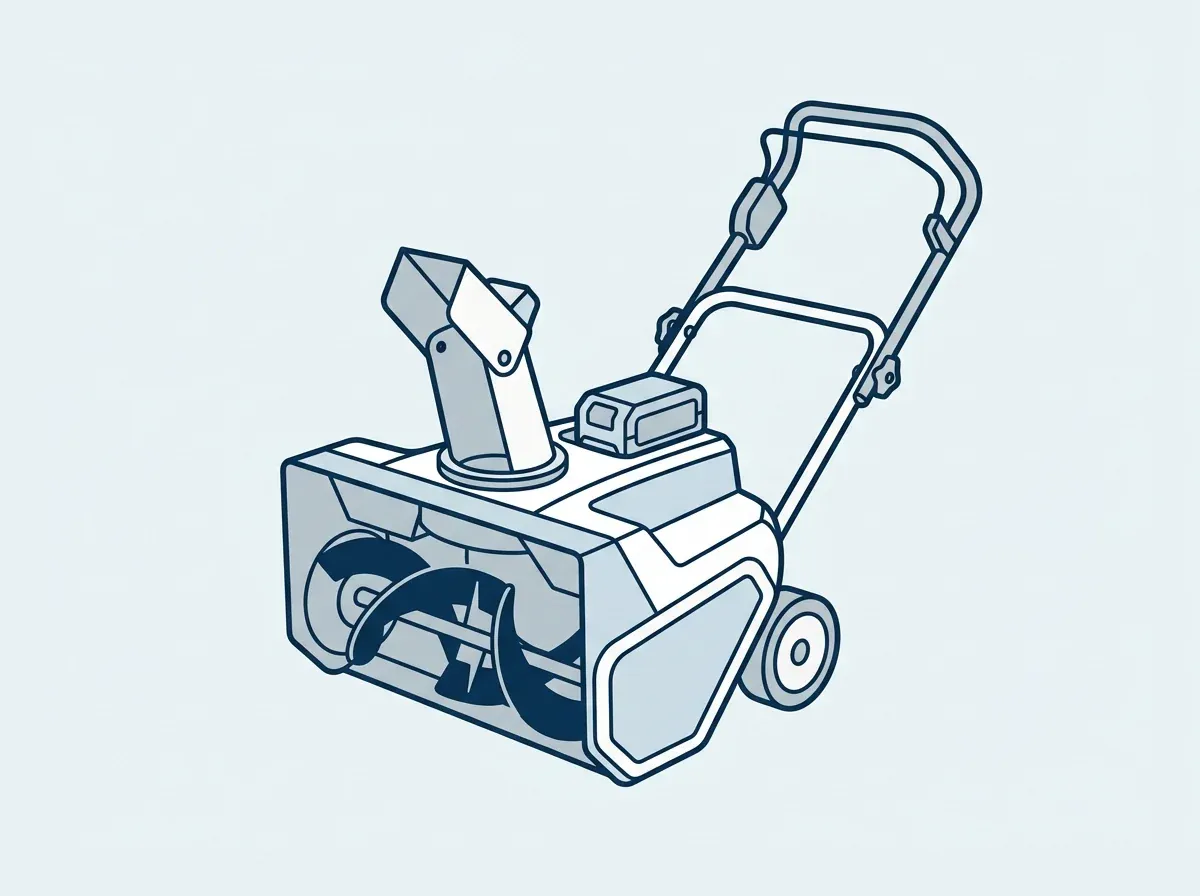
Illustration Greenworks 40V 16-Inch Cordless
It weighs 28 lbs with the battery, clears a 16 in by 10 in path and throws up to 25 ft.
Check price on Amazon(paid link)
Best for walks and small driveways
 On Amazon
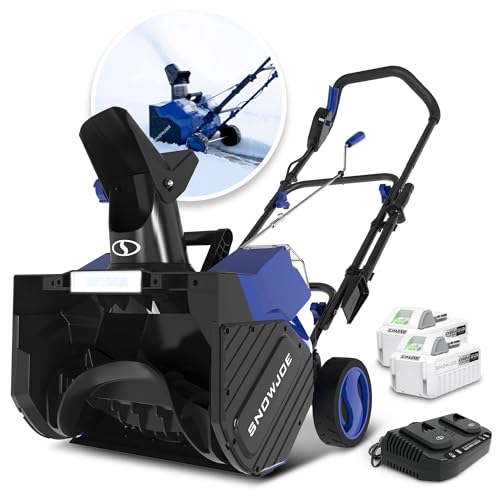
(paid link) Illustration Snow Joe 24V-X2-SB18
It clears 18 in by 10 in per pass, with two 4.0 Ah batteries and a dual-port charger.
Check price on Amazon(paid link)
Best for wet snow
 On Amazon
(paid link) Illustration EGO Power+ SNT2134
EGO says it can clear even the heaviest, wettest snow; it's 21 in wide and throws up to 45 ft.
Check price on Amazon(paid link)
Key takeaways
- A leaf blower is a light-snow tool. Fresh, dry, fluffy snow is its territory. Wet, heavy or packed snow is where it gives up.
- Depth limits are shallow and disputed. Published figures run from about an inch to a few inches, and they don't line up.
- Ice is out of a leaf blower's reach. Air won't lift ice off a driveway, and near freezing a gas blower's exhaust can create fresh ice.
- Batteries lose ground in the cold. EGO says cold affects battery performance in all power tools.
- A snow blower collects snow before throwing it. Its auger does the gathering, something a leaf blower can't do.
In this guide
How a leaf blower and a snow blower move snow
Fine Power Tools sums up the difference: a snow blower scoops the snow up first and then ejects it, which a leaf blower doesn't do.
Inside a snow blower, an auger pulls snow in and sends it up and out a chute. Two-stage machines add an impeller that throws the snow the auger gathers. There's a closer look at what happens inside a snow blower in a separate guide.
A snow blower sends the snow out through a chute you can aim. The three picks above throw snow up to 25 ft (Greenworks), 20 ft (Snow Joe) and 45 ft (EGO). The chute turns 180 degrees on the Greenworks and the Snow Joe, and the EGO gives 200 degrees of directional control.
Which snow a leaf blower can clear
A leaf blower can clear fresh, light, dry snow that hasn't been packed down or frozen. Powdery snow is the sweet spot.
How deep is too deep
Sources disagree on the depth limit: Homes & Gardens (quoting a landscaper) and FridayParts put it at about 1–2 inches, Fine Power Tools at up to two or three inches, and a Top Ten Reviews tester found deeper snow still moves, but slowly. That's a narrow window, even on the generous end. Fine Power Tools treats anything over three inches as a candidate for a snow blower.
If you wake up to a thin, fluffy layer before work, a leaf blower is in its element. If the forecast talks about a real storm, plan on something else.
Where a leaf blower falls short: wet, deep and packed snow
A leaf blower falls short on snow that's wet, heavy, deep or packed, and it won't clear ice.
Wet, heavy snow and slush
Wet, heavy snow is more than a leaf blower can push. Slush brings its own trouble, and EGO warns it can clog the nozzle, since blowers are designed for air, not water. Fix.com warns that water inside a leaf blower can short-circuit its electrical parts, and Hunker that snow inside an electric blower can corrode them.
Packed snow and ice
Snow that's been packed down, trampled or iced over is beyond a leaf blower. Air won't melt or lift ice, and blowing can leave a slick surface behind.
Temperature matters here. Around the freezing mark, the hot exhaust from a gas blower can melt the top of the snow, and that melt can refreeze into a sheet of ice.
Winter jobs a leaf blower does well
A leaf blower does well on small areas under light, dry snow: a porch, a patio, a garden path or a sidewalk. A few inches of dry, powdery snow can also come off a car roof.
It's a poor fit for a longer driveway or any big surface. Ice on the car is a different story. SlashGear points out that a blower won't do much about ice on the windows and that strong wind can damage wiper blades.
Batteries and cold weather
Cold weather can cut battery performance, whether the battery runs a leaf blower or a snow blower.
What the cold does to the picks
On the Greenworks 40V, voltage output may be reduced if the battery's internal temperature drops below -17°C. A cold battery brought indoors should warm up in no more than 10-20 minutes. The battery and charger should be stored indoors at room temperature.
Leaf blowers carry their own limits. Toro's Flex-Force 60V leaf blower manual gives -30°C to 49°C (-22°F to 120°F) for using the battery and blower, and 5°C to 40°C (41°F to 104°F) for charging or storing the battery.
Run time, charging and shared batteries
None of the three snow blower makers gives a run time in minutes. The Greenworks battery charges in 150 minutes, Snow Joe says its batteries recharge in just under 2 hours, and there's no published charge time for the EGO.
The Greenworks 40V battery powers over 100 Greenworks 40-Volt tools. The Snow Joe works with all 24V IONMAX battery configurations except the 24VBAT-XR8 and 24VBAT-XR12. The EGO runs on two EGO 56 V batteries combined through its Peak Power technology. If your leaf blower comes from one of these brands, check whether its batteries match.
When a snow blower is the right tool
A snow blower is the right tool once the snow is deeper, wetter or more packed than a leaf blower can handle, or the area is bigger than a porch or a path.
How much snow each type takes
Single-stage limits vary by brand: Cub Cadet recommends single-stage units for up to 6 inches, and Toro's single-stage machines typically clear up to 9 inches at a time. Both figures are deeper than the leaf blower limits above. Two-stage machines go further, with up to 12 inches from Cub Cadet, 12 inches or more and hard compacted snow from Toro, and often up to 16 inches by Consumer Reports' measure.
Wet snow and tight spaces
Wet snow is where the brands split. Toro credits the scooping action of curved single-stage paddles with handling wet, slushy snow, while Ariens says two-stage models are better equipped for heavy, wet snow.
If you're weighing a battery machine, here's how much snow electric blowers can take. For narrow walks, look at a smaller snow blower for tight spaces.
How I researched this
I read 23 sources for this page: leaf blower and snow blower makers' pages and manuals, and home, garden and tool publishers. The picks come from my buying guides, where I compared 23 products in detail.
FAQ
Is it safe to use an electric leaf blower in snow?
Not always. Some leaf blowers carry warnings against blowing snow, and Toro's Flex-Force 60V manual tells users not to expose the blower to rain or snow.
What should you wear to clear snow with a leaf blower?
Wear safety goggles, waterproof boots with good tread, hearing protection and thick gloves, the gear Homes & Gardens lists for the job. A blower can throw ice shards, loose stone and other debris, which makes it a hazard to anyone nearby.
What airflow does a leaf blower need for snow?
Fine Power Tools suggests about 400 CFM or more for snow. Check the airflow figure on your blower's spec sheet before you count on it for winter work.
How long does a battery leaf blower run when clearing snow?
In a Top Ten Reviews test, an Echo eForce 5.0 Ah battery lasted 31 minutes on a mix of turbo and full power. No temperature is given for that run, so treat it as one result, not a cold-weather rating.
How can you tell if snow is too wet for a leaf blower?
Try making a snowball. If the snow forms one, Fine Power Tools considers it too moist for a leaf blower. Light, dry, powdery snow is the kind a blower handles.
What should you use on gravel?
A leaf blower can blow gravel and loose stone around, so it's a poor match for a gravel path. Snow blowers need care here too. Greenworks does not recommend its single-stage snow throwers on gravel surfaces, while EGO says the SNT2134's skid shoes adjust for improved performance on gravel and irregular surfaces.
Sources
- Greenworks (40V 16-Inch snow blower product page)
- Snow Joe (24V-X2-SB18 product pages)
- EGO (SNT2134 product page and UK leaf blower guides)
- Toro (Flex-Force 60V leaf blower manual and snow blower guide)
- Cub Cadet
- Ariens
- Consumer Reports
- Homes & Gardens
- Bob Vila
- SlashGear
- Gardening Know How
- Fix.com
- Hunker
- ToolGuyd
- Fine Power Tools
- FridayParts
- Top Ten Reviews
More guides
- Best electric snow blowerFive corded and battery models compared on clearing width, throw distance, run time, weight and warranty.
- Best snow blower for womenFive picks ranked by weight, how they start and whether they drive themselves.
- Single-stage vs two-stage snow blowerHow each type moves snow, and which one fits your snow depth and driveway surface.
- Gas vs electric snow blowerMaintenance, starting, run time, power for heavy snow and noise, side by side.
- Snow Joe snow blower reviewThree Snow Joe models, one corded and two battery, compared on maker specs.
- Greenworks snow blower reviewTwo Greenworks 60V single-stage models compared on maker specs, with what each page leaves out.
- Snow blowers for heavy snowFive battery picks compared on stages, intake height, throw distance and battery kit.
- Snow blower for a gravel drivewayFour two-stage battery picks and one single-stage, with what each maker says about gravel.
- Electric snow shovel vs snow blowerClearing width and depth, throw distance, weight, snow type and surface, with two shovel picks and two blower picks.
- Compact electric snow blowersFour small models, 16 to 20 inches wide, compared on clearing width, weight, storage and corded or battery power.
- Snow blower vs snow throwerWhether the two names mean the same machine, what the makers call their own models, and how single-stage and two-stage machines move snow.
- Corded vs cordless snow blowerRun time, extension cords and outlets, weight, cold weather and warranty, with two corded and two cordless picks.
- EGO vs Greenworks snow blowerBattery platforms, warranty, clearing width and throw, two-stage options, and weight and storage, with two picks from each brand.
- EGO SNT2405 vs SNT2416Two 24-inch EGO kits compared on batteries, clearing width, throw, controls and warranty.
- Snow blower vs shovelEffort and strain on the body, snow depth, driveway size, upkeep and noise, with four snow blower picks.
- What size snow blower do I needClearing width by driveway size, snow depth by machine type, corded or cordless, and the extension cord gauges the makers' manuals give.
- Do electric snow blowers workHow much snow they handle, wet snow, plow piles, ice and gravel, battery run time in the cold, and when gas is the better call.
- How does a snow blower work?How the auger, impeller and chute move snow, what powers them, the safety controls, clearing a clog and gravel.
- Snow blower vs plowSnow blower or plow for a driveway: where the snow goes, snow depth, gravel, the end-of-driveway plow pile and plow types.
- Best cordless snow blowersFive battery models compared on the batteries in the kit, single or two-stage, clearing width, throw distance and warranty.
- EGO snow blower reviewFive EGO Power+ models, single and two-stage, compared on maker specs and manuals.
- EGO SNT2134 reviewWhat the 21-inch EGO kit gets you: throw, batteries, cold weather, gravel, weight and warranty.
- EGO SNT2405 reviewThe 24-inch self-propelled EGO kit: controls, drive, weight, batteries, gravel and what testers found.
- Westinghouse snow blower reviewThree Westinghouse models, one 48V cordless and two corded, compared on maker pages and manuals.
- EGO SNT2400 vs SNT2410Two tool-only 24-inch EGO machines compared on chute and steering controls, reverse drive, heated grips, batteries, weight and warranty.
- Snow Joe vs Westinghouse snow blowerCorded and battery models from both brands compared on path size, throw, battery platform, warranty terms and weight.
- Snow blower rubber vs steel augerRubber, rubber-tipped and steel augers compared on ice, wet snow, gravel, pavers and wear, with the auger type of each model on this site.